
Visiting Nice: the must-sees of the capital of the French Riviera
About thirty kilometers from Jasmins Studio, Nice It definitely deserves a day of exploration.
Capital of the French Riviera, Nice possesses a very different character from Cannes or Antibes. Its history is marked by the successive influences of the Greeks, Romans, Piedmontese, and then the French. The city only became French in 1860.
This unique history is reflected in its architecture, its neighborhoods, and its way of life. Here are the places I recommend discovering on a first visit.
Old Nice: the charm of the ancient alleyways
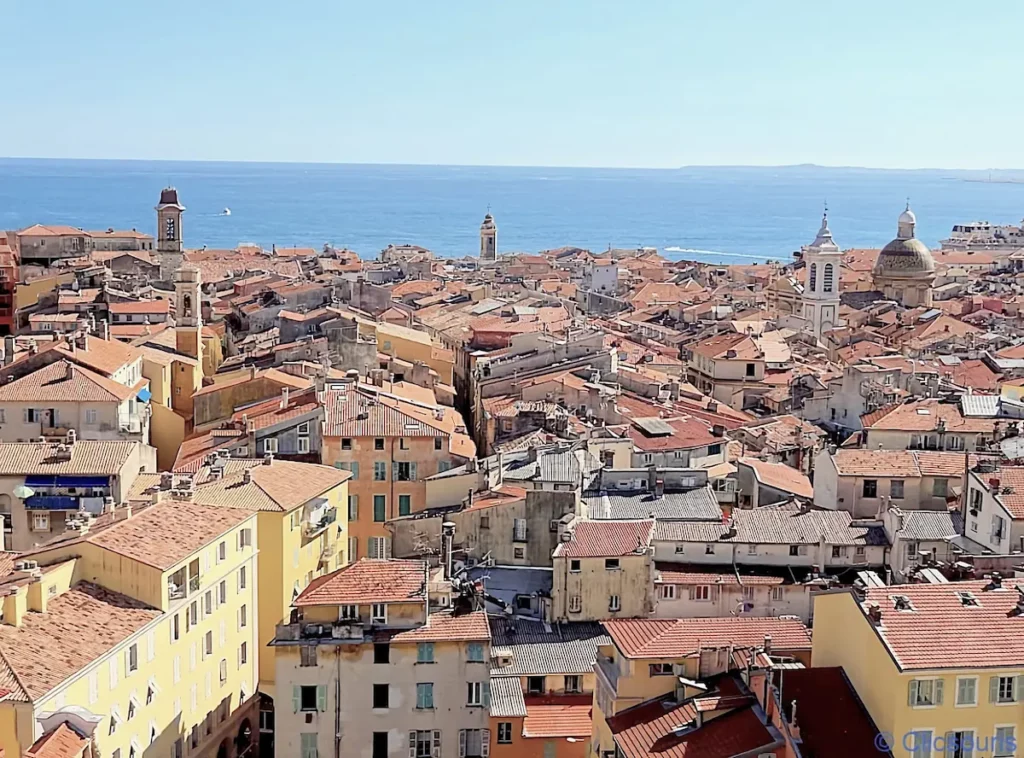
That's where I would start the tour.
THE Old Nice This is a district where you can still find the soul of the city: narrow streets, colorful facades, laundry hanging from windows, restaurants, cafes and small shops. The Italian influence is particularly visible here.
The neighborhood life remains very much alive despite the tourist crowds. Take the time to wander through the little streets rather than following a rigid itinerary. That's often how you make the best discoveries.
Cours Saleya: the market in the colours of Provence
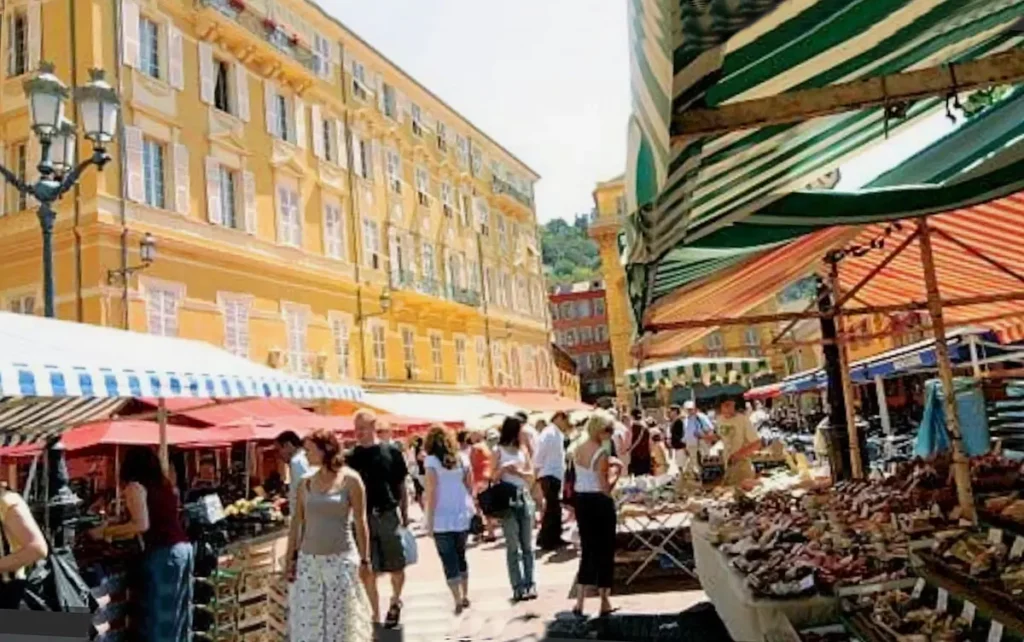
THE Saleya Course It is one of the iconic places in Old Nice. Its market is an excellent opportunity to discover the products, scents and colours of the region.
Flowers, fruits, vegetables and local specialties make up a very lively spectacle.
It's also a pleasant place to take a break and enjoy the Nice atmosphere.
Castle Hill: the most beautiful panorama in Nice
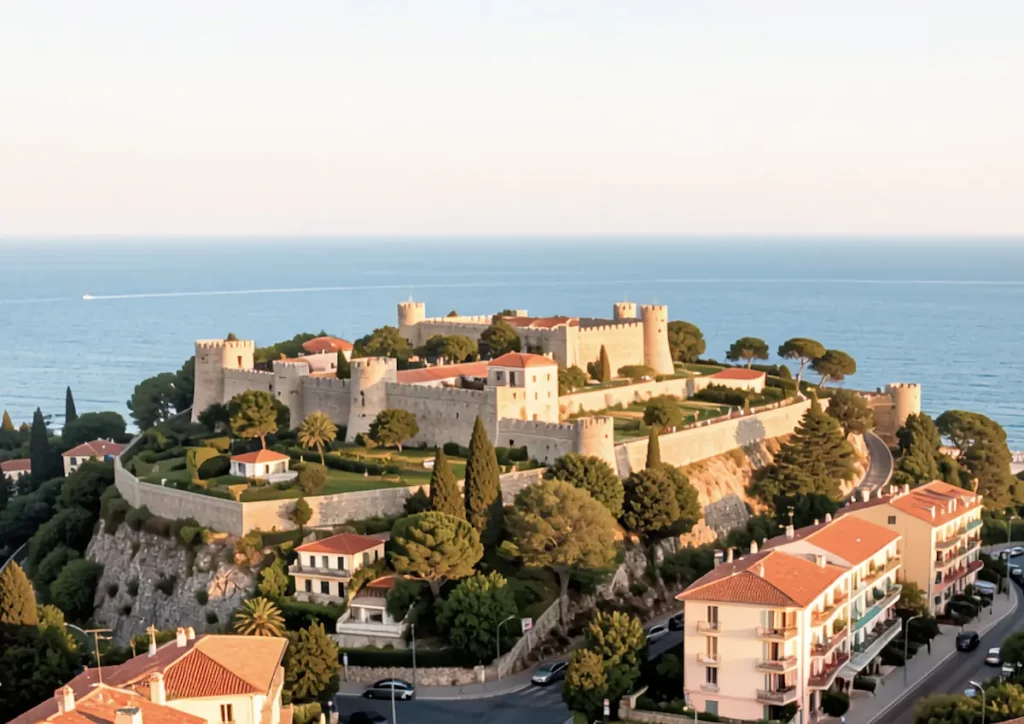
There Castle Hill It overlooks Old Nice and the port. It occupies an important place in the city's history. When the Dukes of Savoy made Nice a stronghold, a fortress was built on this height to protect the city.
Today, virtually nothing remains of this fortress, but the site offers one of the most beautiful panoramas of Nice.
On one side, you will discover the Promenade des Anglais and the Bay of Angels. On the other side, the port and the hills of the hinterland.
The climb is worth the effort, but there is also an elevator to access the summit.
The Promenade des Anglais: facing the Mediterranean
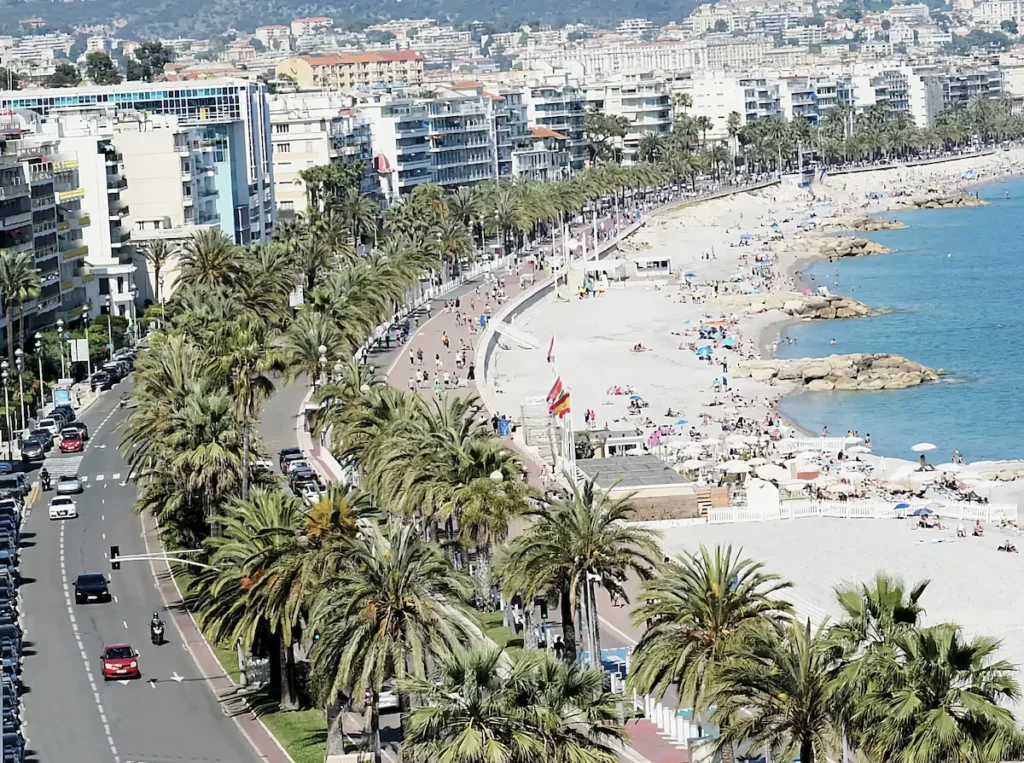
It's impossible to visit Nice without walking at least a few minutes on the English Promenade.
The "Prom'", as the people of Nice call it, has combined the sea, luxury hotels and the tourist life of the city for more than a century.
The contrast with Old Nice is striking: on one side, the historic alleyways and lively squares; on the other, a wide opening onto the Mediterranean and the famous Bay of Angels.
Take the time to stroll along the seafront and admire the facades of the grand hotels that have contributed to Nice's international renown.
The port of Nice: a maritime history
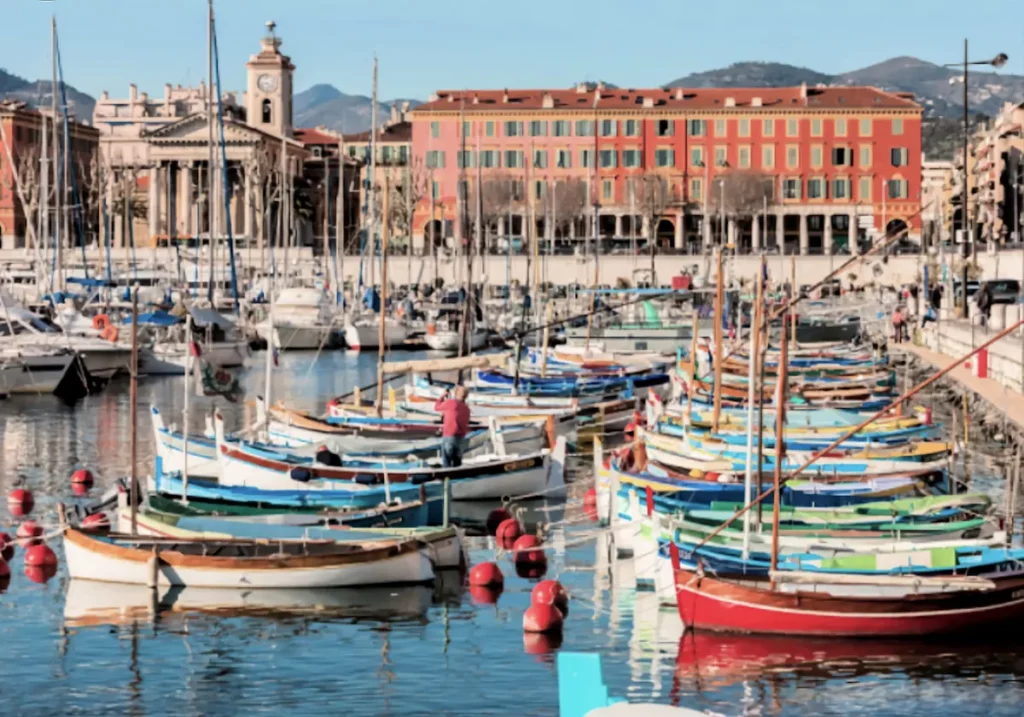
THE Port of Nice It is also worth a visit. Its history is much older than it appears.
At the end of the 18th century, the works undertaken under the impetus of the Savoyard authorities were notably carried out with the help of convicts. The development of the port then went hand in hand with the commercial expansion of Nice.
In the 19th century, port activities experienced a real boom, particularly thanks to the oil trade.
Today, the port has become a pleasant place for a stroll, with its boats, colorful facades and restaurants.
Place Masséna and the Coulée verte
With its red facades and arcades, the Place Masséna constitutes the monumental heart of Nice. In particular, it connects Old Nice to the more modern districts.
The square was created during the urban transformations of the 19th century. Nearby, the Green corridor, also known as the Promenade du Paillon, offers a pleasant walk to the Place Garibaldi area.
It's an ideal place to take a break in the middle of your visit, away from the traffic.

Nice, a cosmopolitan city with multiple influences
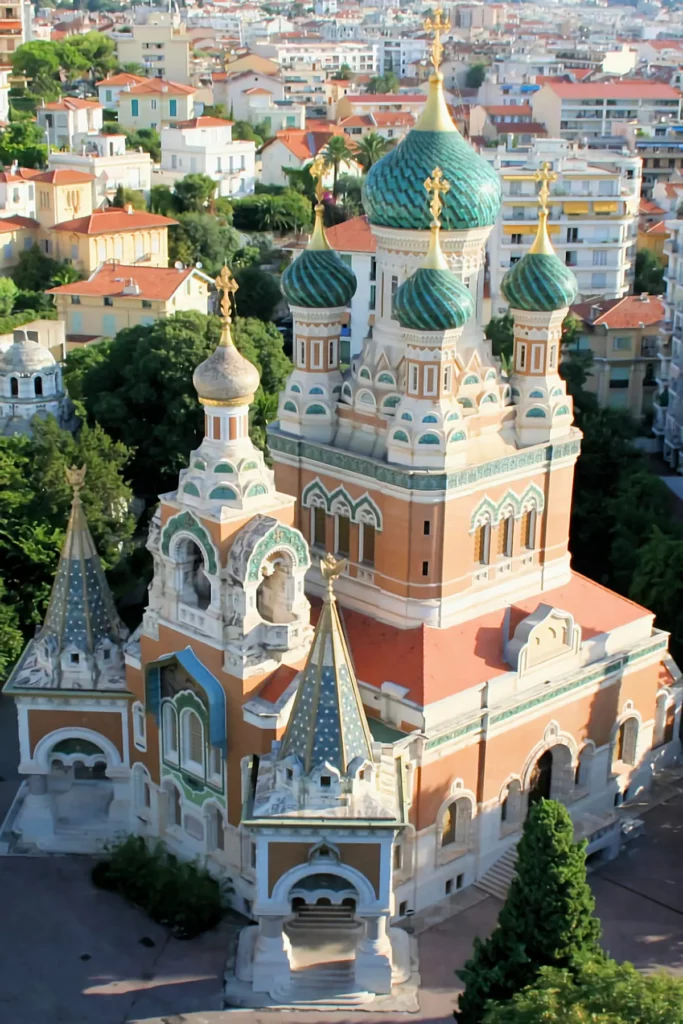
What I find particularly interesting to tell my guests is that Nice isn't just a beautiful Mediterranean city. It's a city of mixtures and influences.
Its history is linked to Savoy and Piedmont, then to France. In the 19th century, the English and Russians played a significant role in the development of winter tourism.
The Russian presence is still visible today through several Orthodox buildings, notably the Cathedral of Saint Nicholas.
Italian influence is also very present in the architecture: many facades bear witness to the work of Italian craftsmen who came to participate in the transformation of the city.
It is this historical diversity that makes Nice particularly interesting to explore.
Nice: some discoveries off the beaten track
Nice isn't just the Promenade des Anglais and Old Nice. If you have more time, you might also be interested in:
- to the less touristy areas and their daily lives;
- to Russian heritage and religious buildings;
- to the old traces of port activity;
- to the old facades and their architecture;
- to the neighborhoods that have evolved over the course of the city's transformations.
A second visit often reveals another side of Nice.
A perfect day to visit Nice
I would advise my guests not to try to see everything in a single day. Here is a pleasant itinerary that allows you to discover the main sites without rushing.
The morning :
- Old Nice and its narrow streets;
- Cours Saleya and its market;
- Castle Hill and its panorama.
At noon: have lunch in Old Nice, to enjoy the atmosphere and local specialties.
The afternoon:
- Place Masséna;
- walk in the greenway;
- Promenade des Anglais;
- Port of Nice.
If you already know the city, spend part of the afternoon in a less touristy area.
From Jasmins Studio in Vallauris-Golfe-Juan, You can travel to Nice for this excursion, then return to the peace and quiet of your accommodation at the end of the day. To plan your stay, also consult the studio equipment and its services and rates and availability for your stay.
Nice and the hinterland: other excursions to discover
Nice also provides an excellent gateway to the hinterland of Nice and the mountain valleys.
Discover our other excursion ideas: